The Endless Los Angeles: An Incentive Program Like no other
/Unless you are from a far-away land and have never been there, you probably still have some notions about Los Angeles. There is, of course, Hollywood and all that it stands for. LA is also known for less flattering attributes: smog, traffic and the fame-seeking ethos of Hollywood. Even if you are a repeat visitor, there’s always something more/new to learn about the City of Angels. It’s impossible to make an LA itinerary for everyone, but for an incentive program, there is no shortage of new and unique things to do. So, we rolled the proverbial red carpet when we were asked to organize an incentive trip for a 17-member board of directors of a multinational. Here’s a synopsis.
By way of a quick background, Los Angeles County is made up of over 4,000 square miles and 10 million people with the largest Mexican and Asian immigrant communities in the US. The County’s GDP stands at $700 billion—larger than many nations’. The City of Los Angeles itself was established by the Spanish in 1781 as El Pueblo de Nuestra Señora la Reina de los Ángeles. The population of the city stands at just over 4 million. The diversity of the city has given rise to many cultural and culinary scenes that make this city very special indeed.
If you are from anywhere else, when you land at LAX, you can already sense the feel of the ocean in the air. After all, LAX is only just over 6 miles from the Pacific Ocean. So, our first destination is Santa Monica, where our group is actually going to be based—more specifically, the Fairmont Miramar Hotel. Perched on the bluffs above Santa Monica State Beach, this palm-studded five-acre property offers 297 rooms and suites, including 31 private bungalows. Not to be missed is an evening at The Bungalow, the beach house-inspired bar that has long been the epicenter of Santa Monica nightlife; and where our group somehow found itself every night.
Glorious Beaches
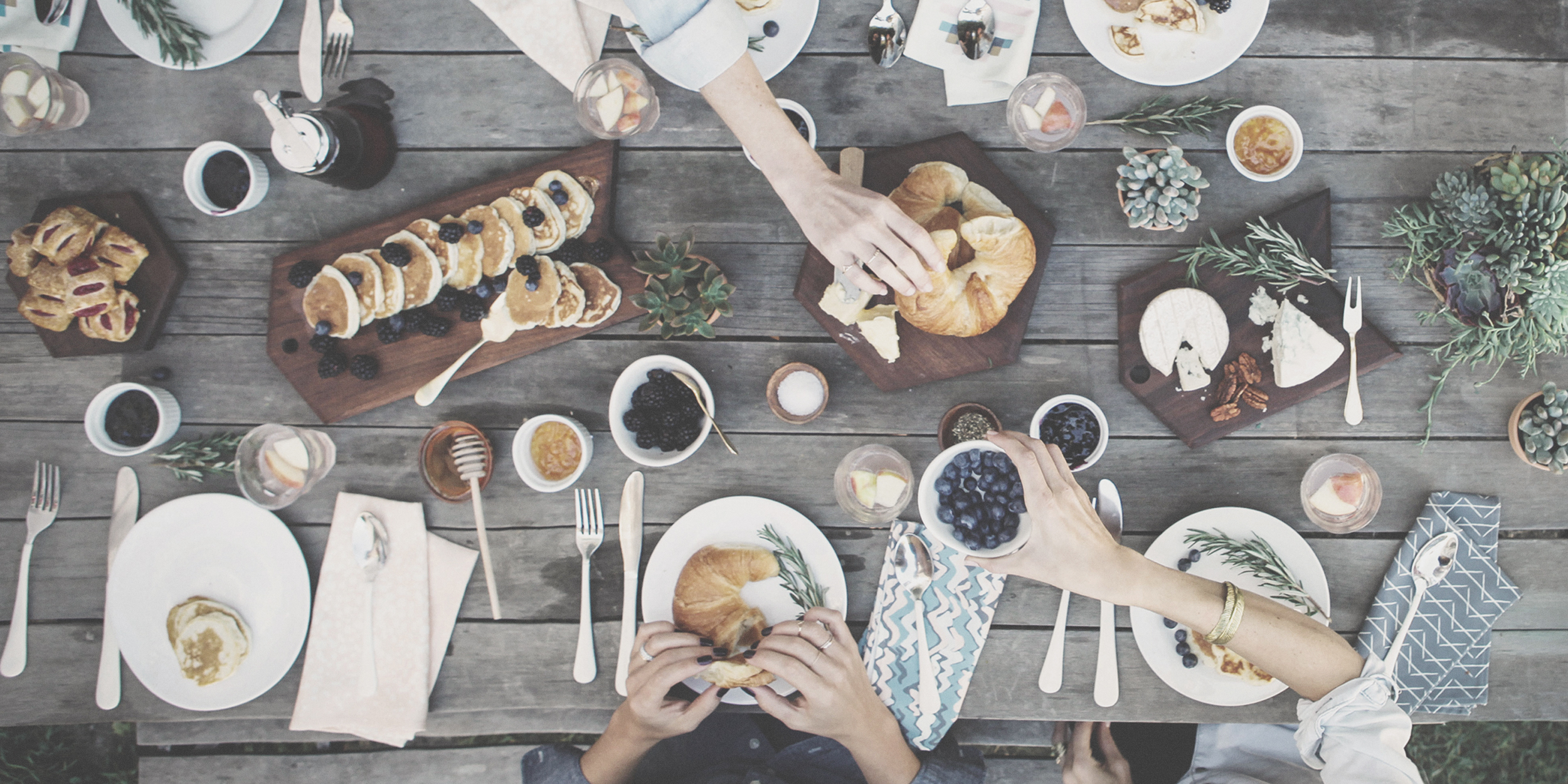
We first meet our group in the lovely atrium at FIG, the poolside restaurant at the Fairmont, where the group was treated to a hearty breakfast, after which we headed to Ocean Avenue, crossed a bridge over the Pacific Coast Highway, and onto the Santa Monica Pier, passing the Route 66 sign [Santa Monica is the end of the famed Route 66 that starts in Chicago], caricature artists, funnel cake stands, and carnival rides on our way to the end of the pier, where fishermen toss their lines in the water and tourists snap photos of sea lions barking for scraps.
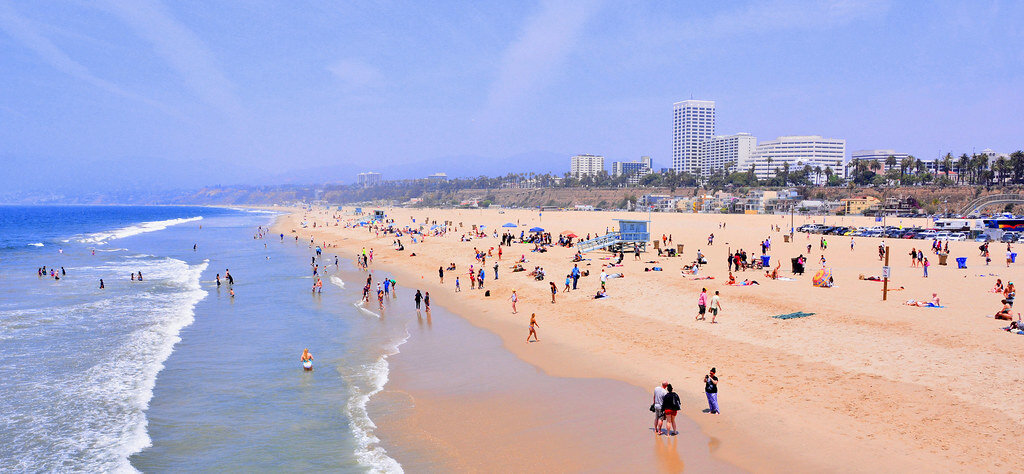
We then headed south toward Venice Beach, the epicenter of Southern California’s grungy, punky beach culture. We watch skaters ollie along the undulating walls of the Venice Skatepark, and then we exit the beach, going a few blocks inland to the Venice Canals. Developer Abbot Kinney built these narrow waterways in 1905 to evoke the other Venice. While there are no gondoliers on these canals, the homes lining the canals make for a fun architecture tour, veering from glass-walled modernist structures to mosaic-tiled hippie bungalows.
A few more blocks up Venice Boulevard, we reach the town’s main shopping drag, Abbot Kinney Boulevard. We stopped to have lunch at Gjelina, which for more than a decade has offered the sort of farm-fresh cuisine and casual-yet-hip vibe that the rest of the world associates with LA.
After lunch and a hurried shopping on Abbott Kinney by some, it was time to move on. The next stop: J. Paul Getty Museum, which stands high on a hill above the most-heavily trafficked freeway in the US—I-405. We had to take a tram up, where the group meanders through the Robert Irwin-designed Central Garden, following a trickling waterfall to a reflecting pool and an azalea labyrinth. The scene is so moving that it’s easy to spend a couple of hours there without even entering the galleries.
The afternoon had begun to wane, so we drove back to the Fairmont. Once night had settled and the lights have come up on the pier, we walked over to the Third Street Promenade, an outdoor mall where fairy lights twinkle and purple jacarandas bloom above shoppers and buskers. At the food court, we go up an escalator and tap a code into a black door marked “private.” When it opens, we entered Dialogue, an 18-seat tasting-menu hideaway that was one of just 24 restaurants in LA to receive a Michelin star this year. As he passes the gorgeous plates, chef Dave Beran explains the inspiration behind his menu. Every dish has something in it from the last one and something to look forward to in the next. The snapper had a ginger mist on it, which went into the ginger-rhubarb foam, which led to a rhubarb chip with matcha and lilac pudding, followed by a cucumber-lilac soda. “None of our dishes are intended to be complete thoughts as much as completing each other’s thoughts,” said Beran.
After dinner, we head back to Abbot Kinney and to the restaurant Scopa Italian Roots, where we tell the maître d’ that we had a reservation at Old Lightning. He promptly confiscates the group’s cell phones and leads us around to the side of the building, through an unmarked door, and into LA’s premier bourbon bar. The glass case along the wall taunts our guests with shelf after shelf of impossible-to-find vintage bottles. This stop made for a perfect night cap, and an end to a day of explorations.
The Reenergized LA
Los Angeles is notorious for its lack of an adequate public transport system which has resulted in the city’s reputation for the worst traffic in the country—if not the world. One is wise to allow a chunk of time to get to where one wants to go. On our day two, we headed to downtown LA otherwise known as DTLA. Our first stop was the Grand Central Market, a 1917 building that is home to all sorts of hip food stalls. Once there, the group scattered throughout the Market—with some ending up at G&B Coffee counter for almond macadamia lattes while others headed to Clark Street Bread for avocado toasts.
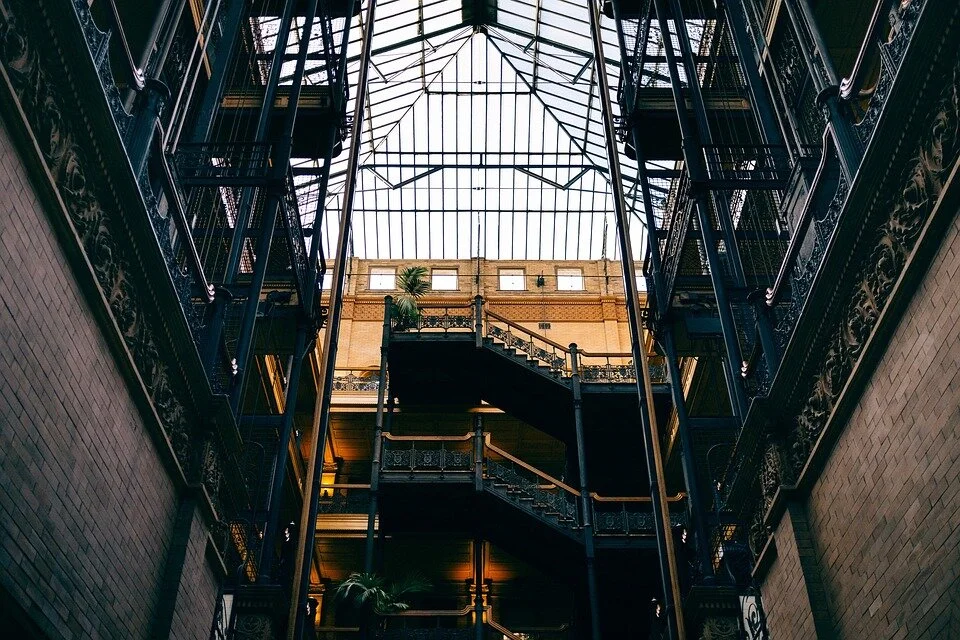
DTLA is an eye candy for those in search of architectural gems. A notable one being the Bradbury Building. The interior of this National Historic Landmark, which was built in 1893 and features five floors of ornate iron railings and elevator shafts climbing toward an expansive skylight, looks both stunningly vintage and eerily futuristic—which has made it popular as a set for many Hollywood movies.
We exit through the side door and continue on through DTLA. This area was once so rundown that some thought it looked like a post-apocalyptic dystopia. However, over the last decade it has been gentrified and has become a reenergized hub of the city, thanks to places like The Last Bookstore. This temple to the written word is probably best known for its second-floor book tunnel, which tourists line up to snap selfies in.
One of the wonderful, contradictory things about this wonderful, contradictory city is that some of its best restaurants are in run-of-the-mill strip malls. One of these is Sushi Gen, in DTLA’s Little Tokyo, where a long line has formed before the doors even open. Thankfully, we had a reservation for our VIP group. Once seated, they are treated to a menu made up of slices of Tsukiji Market-quality fish (buttery tuna, briney sea bream, sweet shrimp, creamy uni).
After that sumptuous lunch, it was time for a little culture. Anyway, the afternoon sun was beating down and bouncing up off the pavement, so we headed to the Broad Museum. The four-year-old building, which entrepreneur Eli Broad and his wife, Edythe, created to house their 2,000-piece collection, stands like a square of honeycomb next to the flamboyantly curvaceous Walt Disney Concert Hall next door. The museum’s ceiling has 318 individual skylights that light the collection gallery. We ride the escalator up to the third-floor gallery, an acre of column-free space where pieces by Jeff Koons, Takashi Murakami, Yayoi Kusama, and Kara Walker are on display.
From there we head over to the up-and-coming Art District. In a converted warehouse space sits Nightshade, Top Chef winner Mei Lin’s much-hyped new restaurant which is an Instagrammer’s dream—with its blond wood, white brick, mint and emerald green upholstery, and hanging plants—surpassed only by the presentation of the dishes.
As our last stop of the day, we head to Clifton’s—a DTLA institution, a Depression-era cafeteria that used to feed 10,000 people a day but fell into disrepair; and was ultimately reborn as a four-story nightlife bazaar following a 2015 renovation. We climb to the top-floor Pacific Seas tiki bar, where the group sits in wicker chairs and sips on Scorpion Bowls that are set on fire by our waitress. We then descend one floor to the Brookdale Ballroom, where dancers in Gatsby-esque getups swing to a New Orleans jazz band.
Hollywood Everywhere
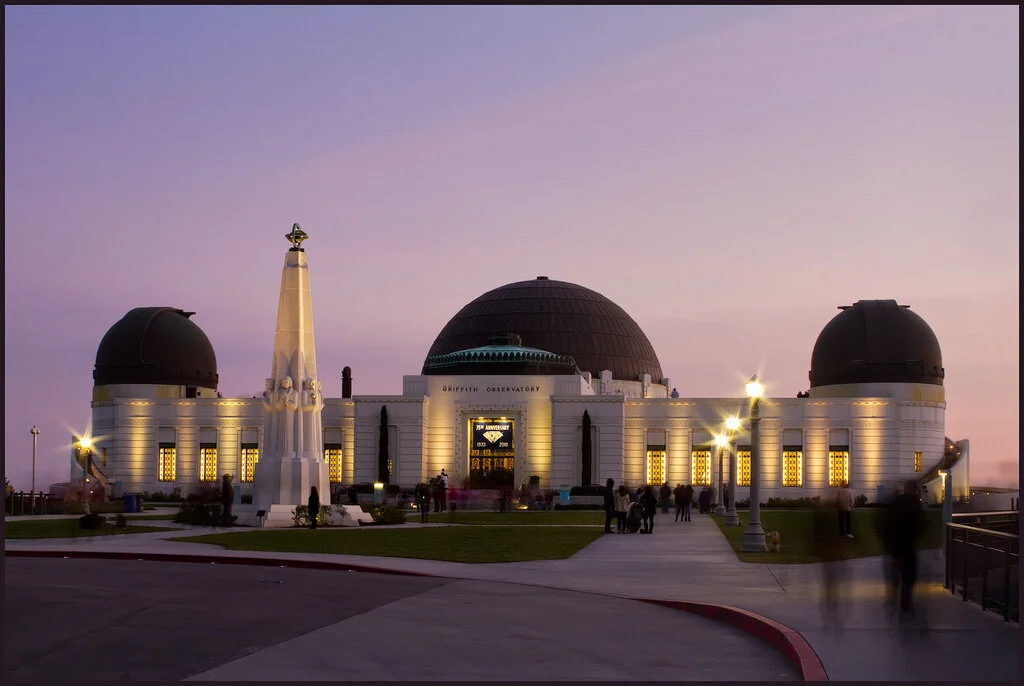
On our final day, the group boards an executive limo-bus for a tour of Hollywood. We take a winding drive through Griffith Park to the Griffith Observatory. The triple-domed Greek Revival building is one of LA’s most recognizable and has been featured in a number of movies. Built in 1935, the Observatory is both an interactive astronomy museum and a spot from which one can see the Pacific Ocean, DTLA, Dodger Stadium, and the Hollywood sign. The group is told that the Hollywood sign was originally erected as a real estate advertisement in 1923, when it read “Hollywoodland.” The land was sold, and the sign should have been taken down, but it became associated with the movie industry and LA. It then became a landmark and was later shortened to Hollywood.
We then cruise up Sunset Boulevard, where our group shops their way through LA’s hippest neighborhood. We then head to Highland Park Bowl, a 92-year-old bowling alley, LA’s oldest, which is decorated with league championship banners from decades gone by.
For their farewell lunch, we take the group to Majordomo, chef David Chang’s first California restaurant. The group is seated at a table beneath a sky-lit warehouse ceiling and shared a menu that reflects chef Chang’s artistry in food.
Night has fallen on Los Angeles. As we head to the airport for the group’s late-night departure, Hollywood Boulevard is already asleep; the only stars sparkling are the ones embedded in the sidewalk. We bid our guests farewell and wish them safe journey home.
For an incentive trip of a lifetime, let the professionals at Destination Los Angeles, curate a program like no other.